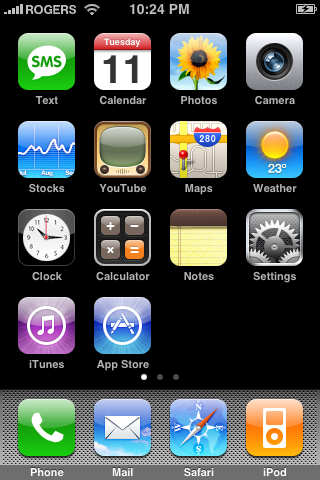
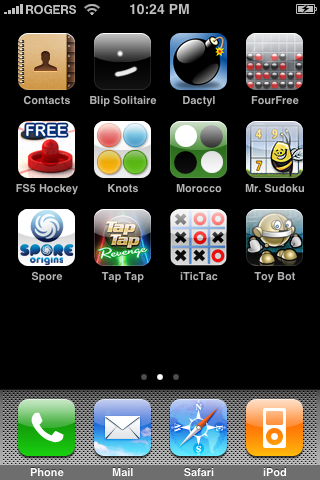
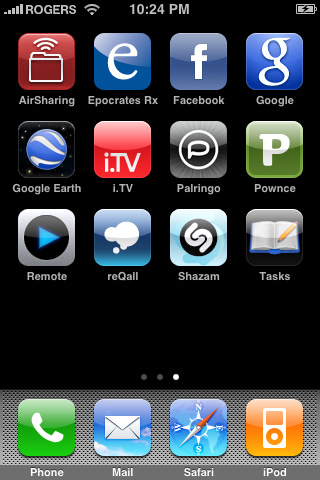
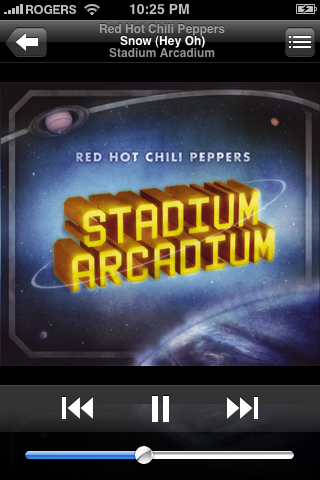
With the release of Apple's iPhone 3G and 2.0 Firmware Update on July 11th, 2008, the iPhone finally became user-expandable, something that's much sought-after in mobile phones. Take the standard Sony Ericsson phone (let's use the W580i slider) – it's a simple phone with a simple interface. Used to pretty much make phone calls and take the short video when you can't find a camera, this phone satisfies the needs of about a third of the population that use cellular phones. But what do the rest of the people who use phones want? The power to do what they want, when they want to. The ability to develop programs for their own use. The ability to expand their phone into something more through the Internet. The iPhone leaped through these barriers by including a full version of Safari on the phone. With it, you can access full web pages, not minimalistic versions designed for mobile devices. With iPhone's 3.5" multi-touch screen, zooming into text is as easy as a double tap on any small section of text. Get to something you can't see like a picture? Just pinch outwards to expand the picture, pinch back inwards to shrink it. Scroll up and down with a literal flick of your finger. It's just that easy. With Apple's SDK, users can code their own applications for download onto their iPhone. Just look at all the possibilities: All of these applications have been developed with Apple's own SDK, and they all perform tasks that would have normally not been available on the original iPhone. As of today, there are over 3,500 officially available applications for use on all iPhones and iPod touches with the 2.0 Software Update. Now is where we get to the core of this article, and the reason I wrote it to begin with: the iPhone and iPod touch are two very versatile, technologically-advanced products in relation to the time we live in now. The very ability to have a full version of the Internet in your pocket is enough to astound anybody, but the ways that we can manipulate this connectivity by creating small applications is, simply put, mind blowing. Think about it... what if we program our iPhones to be "in tune" with our house? Hypothetically, isn't it possible to connect all of our electronics together, and have the iPhone at the heart controlling everything with its fully-capable screen? Let's say you want to watch a movie... simply pull out your iPhone and open your "TV" app. One tap to turn on your TV and DVD/Blu-ray Player, another to load the disk from the drive. Too loud? Just slide the volume down with the swipe of a finger. Want to skip a part? Just drag along the touch screen until you get to where you want to be. Now just dim the lights in your "Lights" app with another swipe of a finger, and you're all set. Your iPhone has made it possible for you to enjoy a movie, all without you having to even get up. Of course this is all hypothetical... for now. While all these different applications may seem impossible to create, companies such as Apple are already on their way to achieving this dream of iPhone bliss. For example, Apple's "Remote" app (below) automatically connects with your iTunes library and allows you to wirelessly play music to any computer or speaker system connected with an Airport Express, all through the power of wireless networks and a develop-able operating system such as the version of OS X that iPhone runs natively. Keep in mind that Apple has set restrictions to developers... for example, no application can access the core services of the iPhone, all applications must terminate upon the closing of the application... limitations that you would expect in order to maintain the safety and security that Apple imposes upon all their products. Unless, of course, you "Jailbreak" the iPhone – that is, remove these limitations and others set by Apple. While this does grant you full access to the iPhone as a whole, it does certain... unwanted things, such as breaking your warranty, rendering your phone useless should an unwanted application or process do something, well, unwanted. It is worth mentioning at this point that the iPod touch does not suffer from this accidental bricking, as it does not have to be activated to be used. The iPhone must be activated with a carrier, and a complete restore of the firmware will erase this activation rendering the phone unusable. We've only taken a short glimpse of what the iPhone and iPod touch are capable of doing with their wireless Internet capabilities and full developer-SDK. I'm positive that the day will come where the iPhone will be able to start your coffee maker in the morning, warm the tap water to the perfect temperature and access your thermostat... while this day may not be tomorrow or the day after, the iPhone's time will come. But until then, we should make do with the already-amazing developmental powers the iPhone possesses. And we can do this with the App Store. Coming up next: The App Store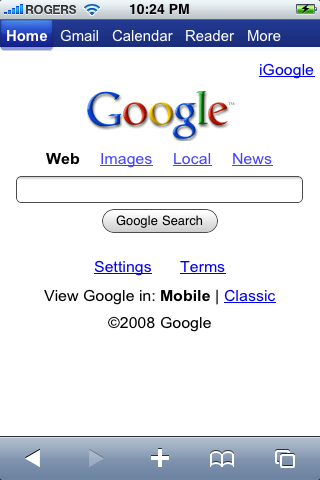
Tuesday, November 11
iPhone 2.0 FW Update – Part Two
Labels:
iPhone,
iPhone OS,
iPod touch


Subscribe to:
Post Comments (Atom)


 Posts
Posts


0 comments:
Post a Comment